We Measured How AI Recommends Our Firm. It Doesn't.
August 3, 2026
/
6 min read
(Coming soon)




I spend my days helping B2B SaaS companies get noticed, positioned, and, the part that actually pays the bills, recommended. So a few weeks ago I ran the test I'd run for any client. This time the client was my own firm.
I measured the exact questions our buyers ask when they're hiring — seventeen of them, spanning the five things we do: positioning and messaging, go-to-market strategy, analyst relations, product marketing audits, and choosing a marketing partner — across three of the most-used AI engines (ChatGPT, Perplexity, Gemini), and tracked how often we surfaced.
Sit with that for a second. I run a firm whose entire job is making companies legible and preferred in the market. And the fastest-growing channel buyers use to build their shortlist had, functionally, never heard of us.
If you're not in the answer, you're not on the list — you just never see the deal you weren't invited to.
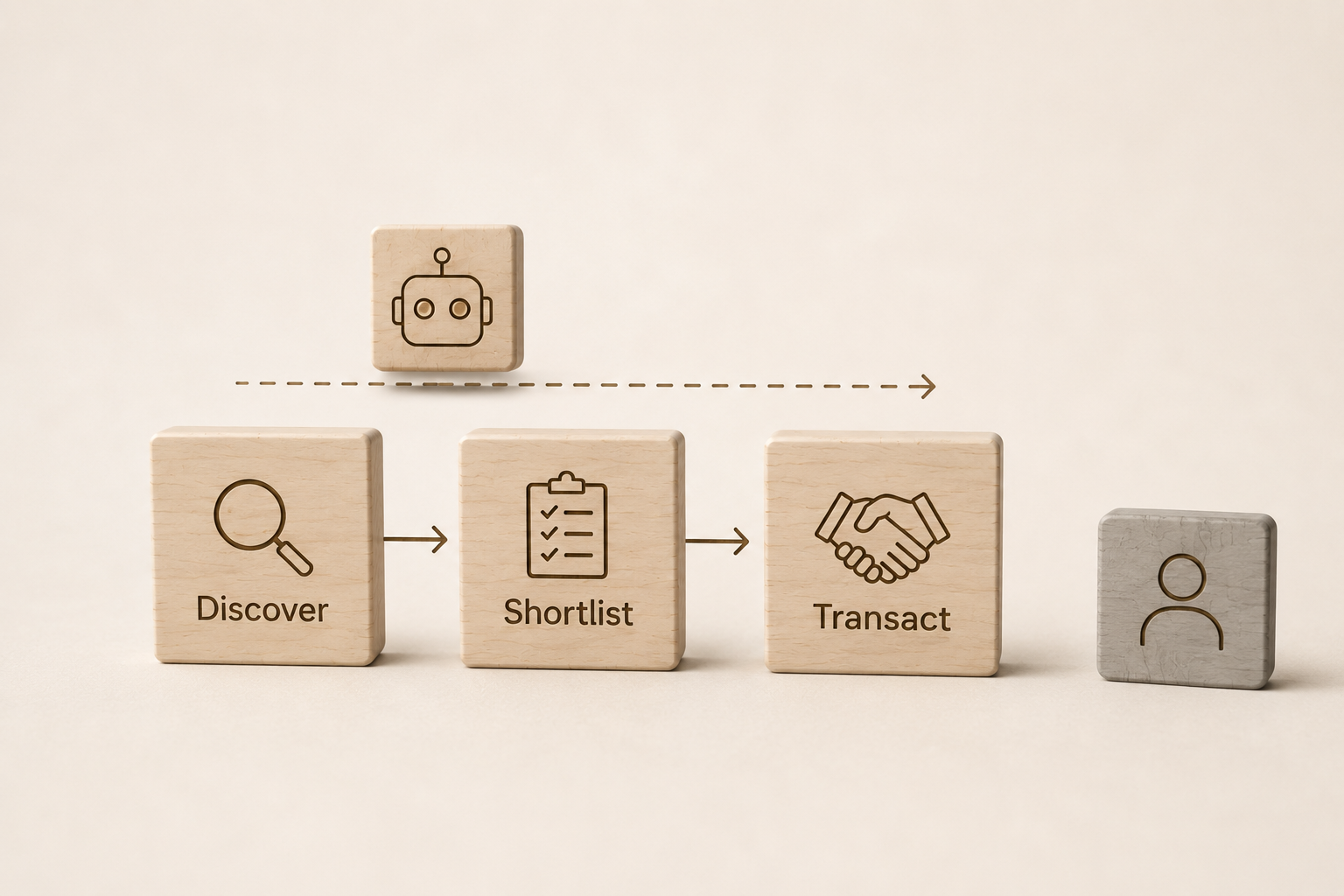
For as long as B2B buying has existed, buyers have leaned on an evaluator to narrow the field before they ever talk to a vendor — an analyst's report, a trusted peer, a review site, the first page of Google. Something they trusted to say "these are the ones worth your time."
AI is now that evaluator as well. And it's the most powerful one we've ever had: it reads everything, answers instantly, and hands over a shortlist on demand — assembled from whatever it can find and corroborate about your category. It's shaping those shortlists in real time, at a scale no single gatekeeper ever could.
If you're not in the answer, you're not on the list — you just never see the deal you weren't invited to.
I'll go deeper on that shift in a separate piece. For now the point is narrower and more uncomfortable: being genuinely good at something is no longer enough to be found to be good at it.
Here's the part that surprised me least, in hindsight. AI engines don't reward the sharpest positioning statement on your homepage. They surface what they can extract and corroborate across the web, clear answers to specific questions, echoed in enough places to be trusted.
Most B2B websites, mine included, were built to impress a human who already arrived. They lead with identity ("the strategic partner for B2B SaaS growth") instead of answering the question a machine is actually trying to resolve ("which firm should I shortlist, and why"). A person fills in the gaps. A model doesn't. It moves on to a company that made the answer easy.
In our case, it's worse. Ask an AI who helps with analyst relations and it returns seven competitor names. Ask it who helps European SaaS enter the US and it returns the same firms, plus Gartner, Forrester, and IDC, because the model can't distinguish the firm you want coverage from and the advisor who gets you there. We show up in zero of those answers.
Ask it which firms do positioning and go-to-market work, and nobody shows up consistently, the category is so muddled that AI answers are essentially blank. We're competing in a space where there's no front-runner, no category definition to own.
Ask it which firm does both product marketing and analyst relations as one engagement, and we rank. That's the answer where visibility is 0.67, where we rank first, where the sentiment doesn't suck. It's the category we actually are, and it's the one nobody else occupies.
I'm taking my own medicine, in public.
I'm rebuilding our content around the real questions buyers ask instead of the slogans we like. I'm writing answers a machine can actually lift, specific, structured, honest. And I'm working to show up in the places these models already read, rather than shouting from a corner they never visit.
I'll report the results here, visibility, share of voice, sentiment, whether they go up or sideways. One honest caveat up front: this moves on the engines' schedule, not mine. Models re-crawl and re-weight on their own clock, so I'm treating this as a season of work, not a switch to flip. I'd rather show you the real curve than a before-and-after that skips the messy middle.
If you lead marketing at a B2B SaaS company, do this today. Open the engine your buyers actually use and ask it to recommend a company like yours. Then ask it why it picked who it picked.
You may not love the answer. I didn't. But you can't fix what you won't measure, and right now, most of your category is refusing to look.
That's the whole game now: not just being good, but being legible, built to be found, quoted, and recommended by the systems making the shortlist.
I'm documenting my climb from 6.9% in public. Follow along, or if you want to see your own number, reach out and I'll show you how I ran mine.
Contact us to learn more about how we can help you accelerate your business success.

